
The short version: One of the simplest ways to build psychological safety on a team is to say “thank you” first: before you answer the question, fix the mistake or reply to the email. Research shows that people who are thanked are about twice as likely to help again. When leaders thank people for asking questions and pointing out problems, they make it safe for people to keep doing both.
Prefer to watch? Here’s the 4-minute version:
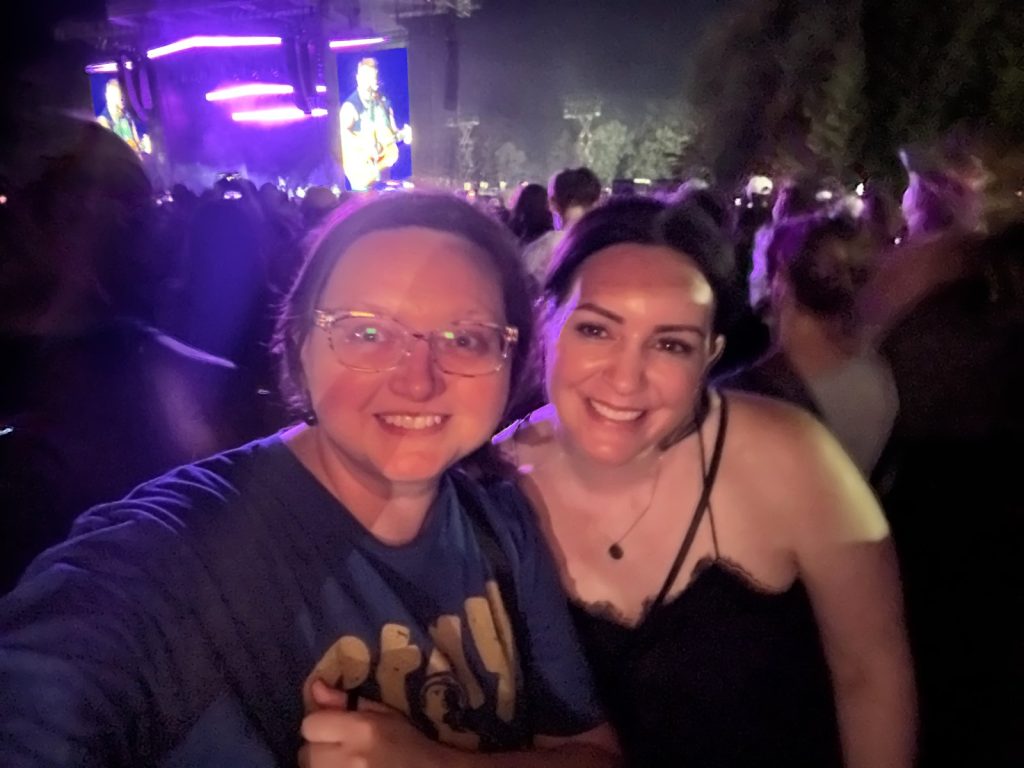
A few weeks ago, I saw Zach Bryan live, and one thing stood out to me. After almost every song, he said thank you.
“Thank you all for coming out tonight.”
“Thank you to the event staff, security, and everyone working to make this show happen.”
“Thank you to the veterans in the crowd. Thank you for your service.”
As someone in that crowd who spent money on tickets and drove several hours to get there (and several hours home, well past my bedtime), it felt good to be thanked. I noticed it. I appreciated it.
And it got me thinking about one of my favorite leadership habits of all time: say thank you.
It sounds so simple I almost can’t believe I’m writing about it. But stay with me, because this one small habit changes how people experience working with you.
What does “say thank you first” mean?
Before, if someone asked me a question or sent me an email, I’d just respond. Answer the question, move on.
Now I take one second first and ask myself: would “thank you” be a better first response?
A surprising amount of the time, it is.
Example 1: When someone asks you a question
Say one of your direct reports emails you with a question. The old me would just answer it. Now I start with: “Thanks for asking.”
Here’s why that matters. Every time someone asks a question, they’re taking a small risk. They might look like they don’t know something. If you just answer, that’s fine. But if you thank them first, you’re telling them that asking questions here is a good thing, so keep doing it.
As a leader, you want people asking questions. That’s how you find out what’s confusing, where people are lost, what’s broken, and what’s about to go wrong before it actually does.
Example 2: When someone points out your mistake
This one is harder. When someone catches our mistake, our instinct is to explain, blame, defend, or rush to fix it so we can move on.
Instead, try starting with: “Thanks for catching that.”
Think about what that does. The person who spoke up just took a real risk. They may have just told the boss that the boss got something wrong. If your first words are “thank you,” you’ve made it safe for them, and for everyone watching, to speak up next time.
That’s how you build a team that tells you the truth.
Why does saying thank you work so well?
Researchers Adam Grant and Francesca Gino studied this. In one experiment, people who were thanked for their help were about twice as likely to help again as people who weren’t. Twice as likely, from two words.
Being thanked tells us our effort mattered and that we made a difference. And when we know we matter, we lean in.
That’s the heart of psychological safety, a term coined by Harvard professor Amy Edmondson: the shared belief that it’s safe to take interpersonal risks on a team, whether that’s asking the question, admitting the mistake or pointing out the problem. When Google studied what made its most effective teams work, psychological safety came out on top.
So when you say thank you first, you’re not just being polite. You’re building the conditions for your team to do its best work.
Your challenge this week
Before you reply to anything (an email, a text, a question, a correction), pause for one second and ask yourself: would “thank you” be a better first response?
I think you’ll be surprised how often the answer is yes.
Who’s one person you could thank first today?
P.S. My country playlist, for anyone else who’s late to the party. (How I became a Zach Bryan fan in the first place is its own story.)
Want more habits like this?
Small leadership habits, delivered to your inbox.
Practical insights for leaders who want to lead with more clarity and less overwhelm. A space to pause and reconnect.
Frequently asked questions
How does saying thank you build psychological safety?
Thanking someone for a question, a concern or a correction rewards the risk they just took. Over time, that shows the whole team that speaking up is welcome, which is what psychological safety means.
What should a leader say when someone points out their mistake?
Start with “Thanks for catching that.” Then fix it. Leading with thanks instead of defending yourself makes it more likely that people will flag problems early.
Does gratitude at work actually make a difference?
Yes. In research by Adam Grant and Francesca Gino, people who were thanked for their help were about twice as likely to help again.
Isn’t saying thank you all the time insincere?
Only if you don’t mean it. The habit isn’t about thanking automatically. It’s about pausing to check whether thanks is the right first response, and most of the time it is.
Sources: Grant, A. M., & Gino, F. (2010), “A Little Thanks Goes a Long Way,” Journal of Personality and Social Psychology. Edmondson, A. (1999), “Psychological Safety and Learning Behavior in Work Teams,” Administrative Science Quarterly. Google re:Work, Project Aristotle.